
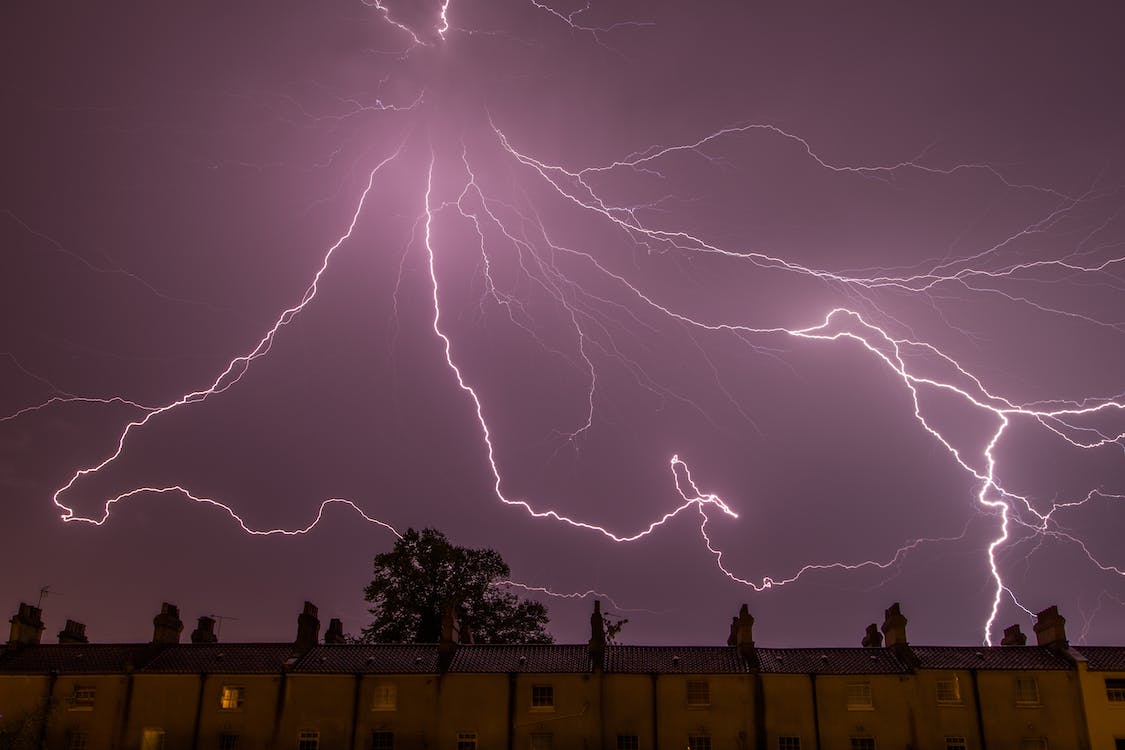
CLIMATE CHANGES ARE THE MOST IMPORTANT ENVIRONMENTAL EFFECTS OF ENERGY PRODUCTION FROM FOSSIL FUELS.
COP29 – UN Climate Conference BAKU (Azerbaijan)
A deal has been agreed – It calls on all countries ‘to move away from the use of fossil fuels – but not to phase them out’.
118 countries signed a renewable energy pledge to triple the world’s green energy capacity to 11,000 GW by 2030, thereby, reducing the reliance on fossil fuels in generating energy.
Twenty-two countries have expressed their multilateral commitment to triple nuclear energy generation by 2050, to provide one-third of global electricity to come from nuclear reactors.
These changes occur due to the so-called Greenhouse Effect.
What Is the Greenhouse Effect?
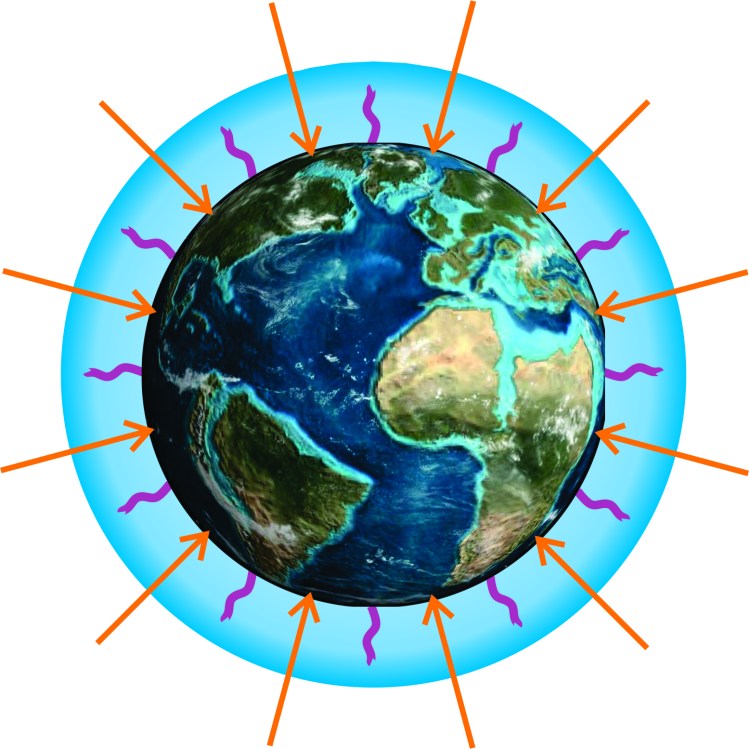
Our planet receives energy from the Sun mostly as ultraviolet (UV), visible (V) and infrared (IR) radiation. About 70% of that energy is absorbed by the Earth’s surface, while the rest is reflected into the Cosmos. The absorbed part warms up the surface temporarily. During the night that energy is emitted from the surface into the outer space in the form of infrared (thermal) radiation. One part of it is absorbed by IR active gases (greenhouse gases) close to the Earth’s surface and remains trapped in the atmosphere. In this way the atmosphere acts as a warming blanket that allows the average temperature of the Earth’s surface to be significantly higher than it would be without this mantle. It is the greenhouse effect.
The greenhouse effect is a natural process of crucial importance for the existence of life on Earth. Without it, the average annual temperature of the Earth’s surface would be about -18 ºC, instead of 14.2 ºC, as it was in the mid-twentieth century (see diagram), before the steep increase, which occurred due to the increase of concentrations of gases with the greenhouse effect. That increase is more than the Earth could absorb. It makes the Earth’s „blanket“ thicker, which leads to so-called global warming. Unfortunately, it still happens.
More greenhouse gases means a warmer Earth.
Greenhouse Gases (GHG)
Earth’s atmosphere contains two types of gases:
- Homonuclear gases, those whose molecules are composed of the same atoms (nitrogen-N2, 78%, and oxygen-O2, 21%), which are the main components of the Earth’s atmosphere and which are not active in terms of absorbing IR radiation (heat);
- Heteronuclear gases – their molecules are composed of different elements and are therefore IR active: carbon dioxide, water vapor, methane, nitrous oxide, fluorinated gases. Regardless of the fact that their concentrations in the atmosphere are very low, they have a huge effect on the climate. All of them are of natural origin with the exception of fluorinated gases.
- Carbon dioxide-CO2 is created in various processes on Earth and is continuously exchanged among land, water, atmosphere and living organisms, but it is also created as a product of human activities, especially from the combustion of fossil fuels.
- Water vapor-H2O enters the atmosphere in different ways, mainly from oceans and other water reservoirs. It is in constant equilibrium with liquid water on Earth. It is also created in the processes of burning some fossil fuels (oil and natural gas). However, its concentration in the atmosphere is not a function of those processes, as is the case with other greenhouse gases. It is mainly determined by temperature: warmer air – more water vapor. Since the increase in the temperature of the atmosphere is still small, regardless of global warming, it can be considered that its concentration is relatively constant.
- Methane-CH4 is a gas with powerful greenhouse potential. It enters the atmosphere from various processes in nature, such as rotting, processes in wetlands, animal digestion, etc. as well as from the exploitation of natural gas, which we use as a source of energy, and which is mainly composed of methane.
- Nitrous oxides-N2O are released from agriculture, burning of fossil fuels, etc.
- Fluorinated gases (hydrofluorocarbons-HFCs, perfluorocarbons-PFCs, nitrogen trifluoride-NF3, and sulfur hexafluoride-SF6) are artificial chemicals. Therefore, their production, usage and release into the atmosphere can be more easily controlled. Their concentrations are very low, but they have huge worming potential.
Global GHG emission is currently over 51 billion tons of carbon dioxide-equivalents per year!!!
Global Warming Potentials
Greenhouse gases, after entering the atmosphere, persist in it for different periods of time, which are a function of their chemical stability under atmospheric conditions. These periods are usually expressed through a parameter called lifetime.
Thus, carbon dioxide is a compound that is chemically very stable, which is why it constantly accumulates, especially if there is a global emission that is well above natural limits.
Other greenhouse gases have finite lifetimes.
The ability of greenhouse gases relative to carbon dioxide to absorb IR radiation is expressed through a parameter called Global Warming Potential (GWP). It is defined as a number showing how many times a gas is more effective in causing global warming over a period of time (usually 100 years) than carbon dioxide, which is taken as reference (GWP100 = 1). In other words, this parameter shows how many times more energy a gas will absorb than carbon dioxide for the same emitted mass over a period of 100 years.
CONCLUSION – Carbon dioxide is the greenhouse gas with the lowest GWP100, but its emission and total amount in the atmosphere significantly exceed those of other gases.
WHICH GAS HAS THE BIGGEST IMPACT ON CLIMATE CHANGE?
That influence is a function of the amount of each GH gas in the atmosphere and the effect corresponding to its share. An analysis that takes this into account shows that carbon dioxide is dominant, although it is the “weakest” of all GH gases. Namely, CO2 is responsible for 66% of global warming. It is followed by methane, which accounts for about 15%. The rest of almost 20% of GW is the contribution of the remaining group of GH gases.
SAVE THE PLANET
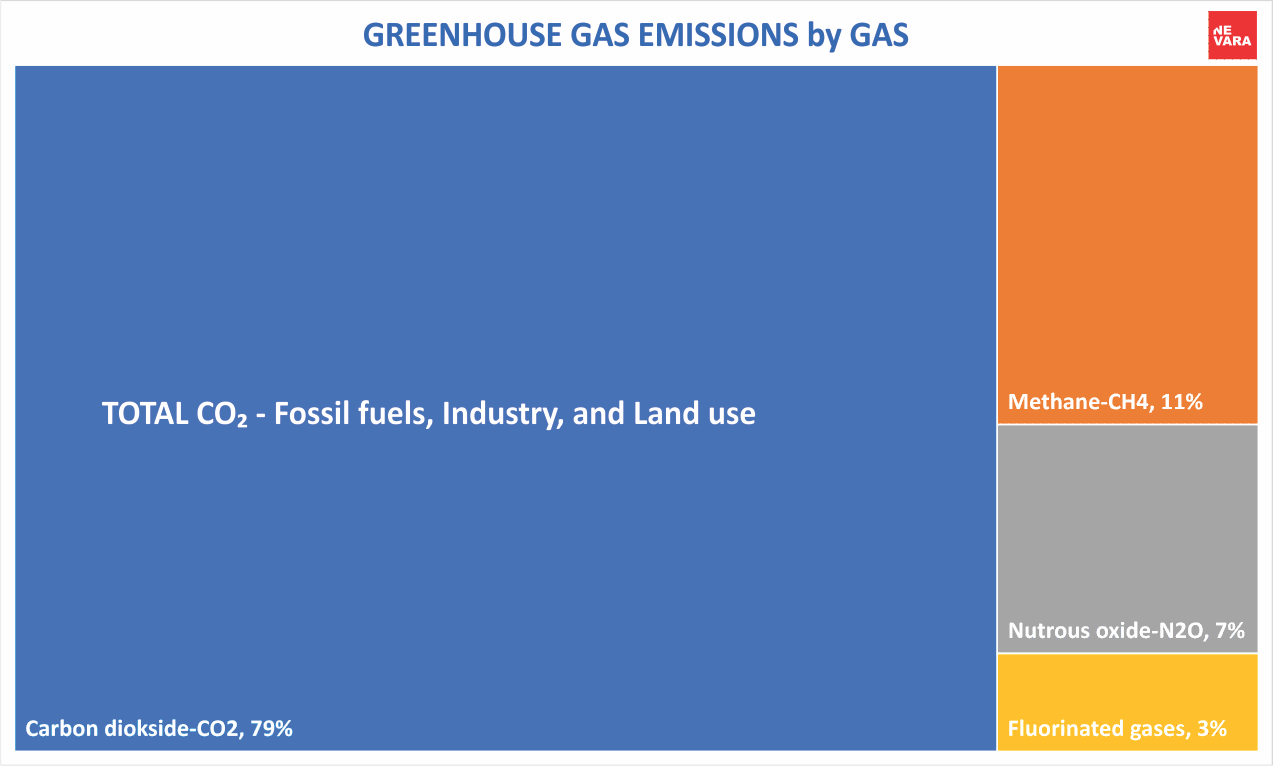
GREENHOUSE GAS EMISSIONS by GAS

PARAMETERS RELATED to GLOBAL WORMING for greenhouse gases – Lifetime and GWP100
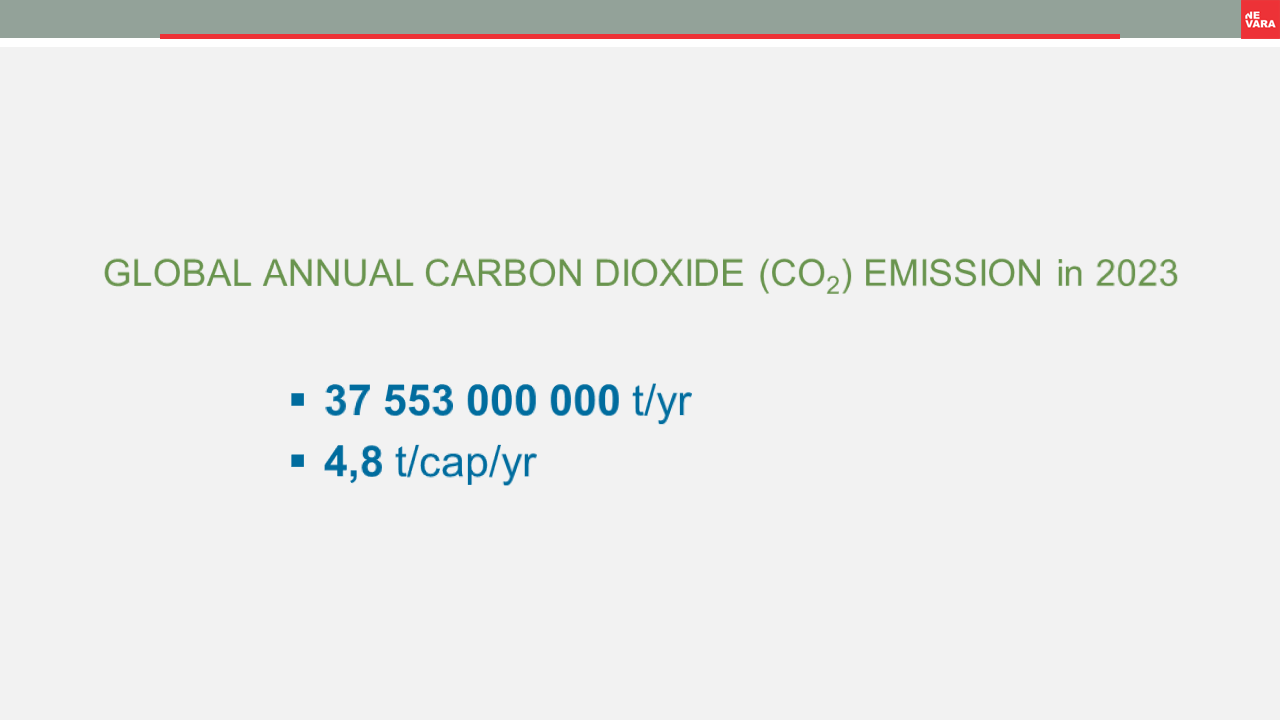
GLOBAL ANNUAL CARBON DIOXIDE EMISSION.
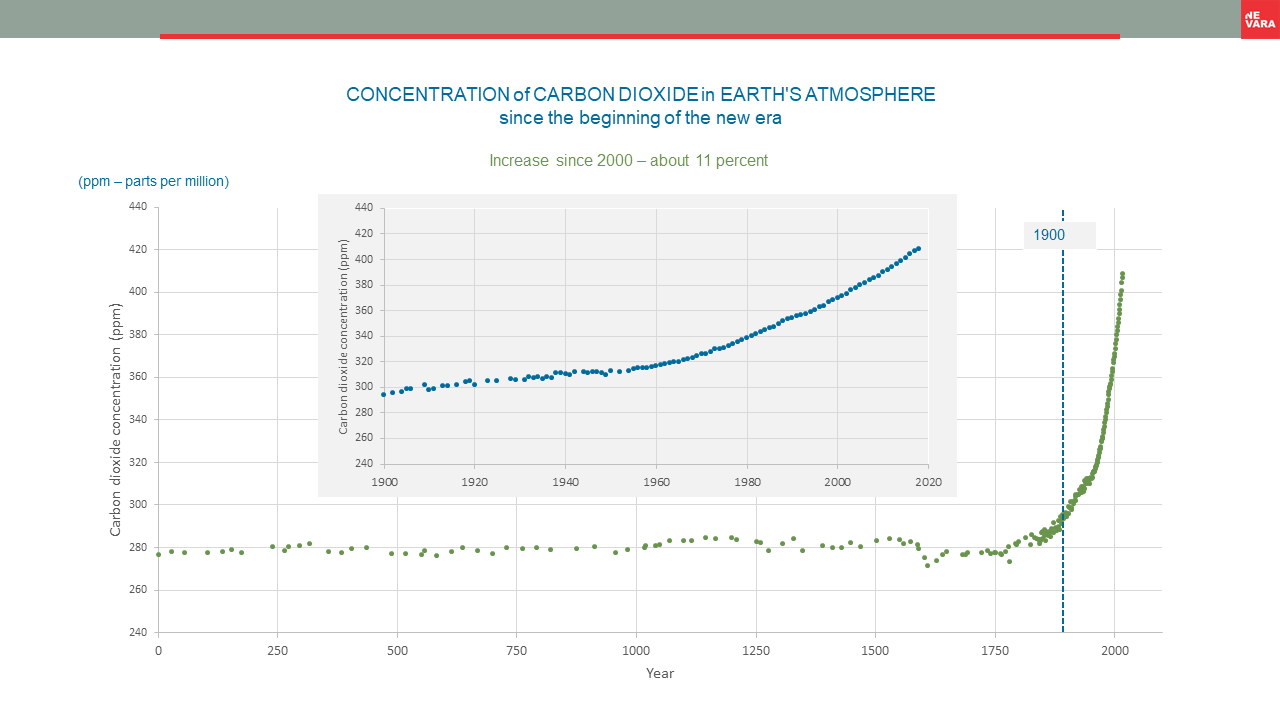
CONCENTRATION of CARBON DIOXIDE in EARTH’S ATMOSPHERE since the beginning of the new era. – It is now at the level of 420 ppm.
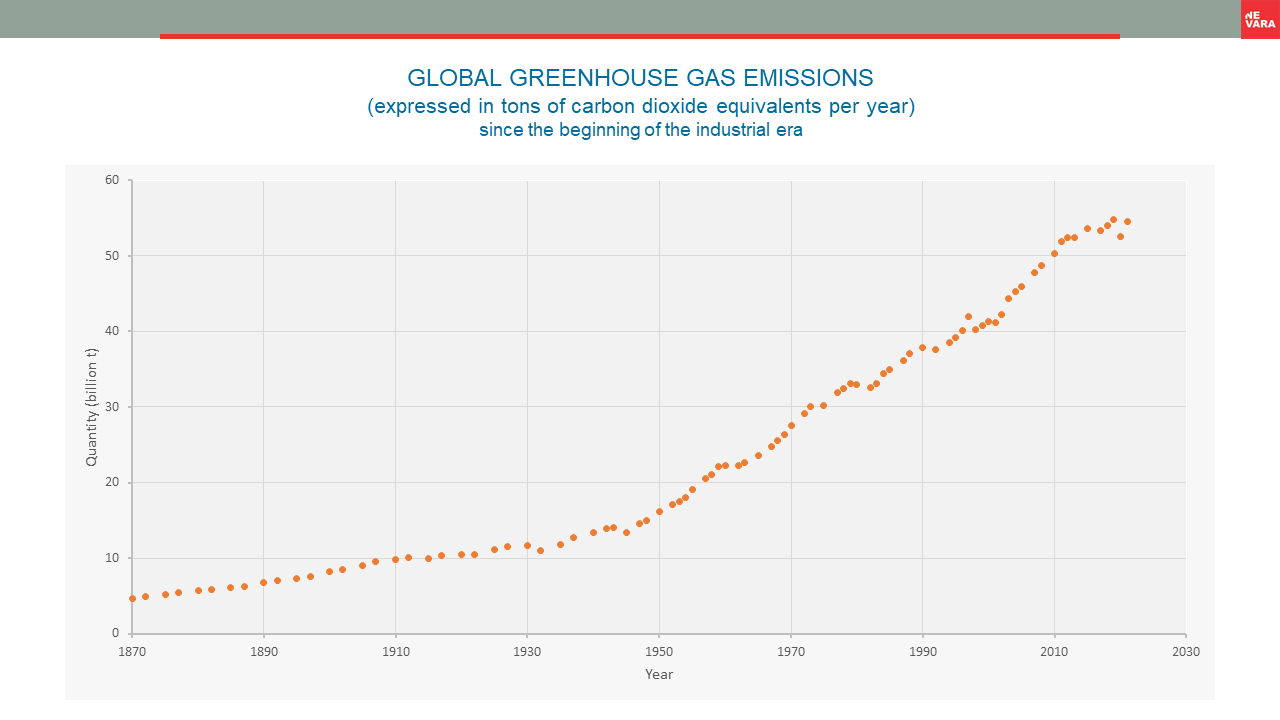
GLOBAL GHG EMISSIONS PER YEAR from the beginning of the industrial era
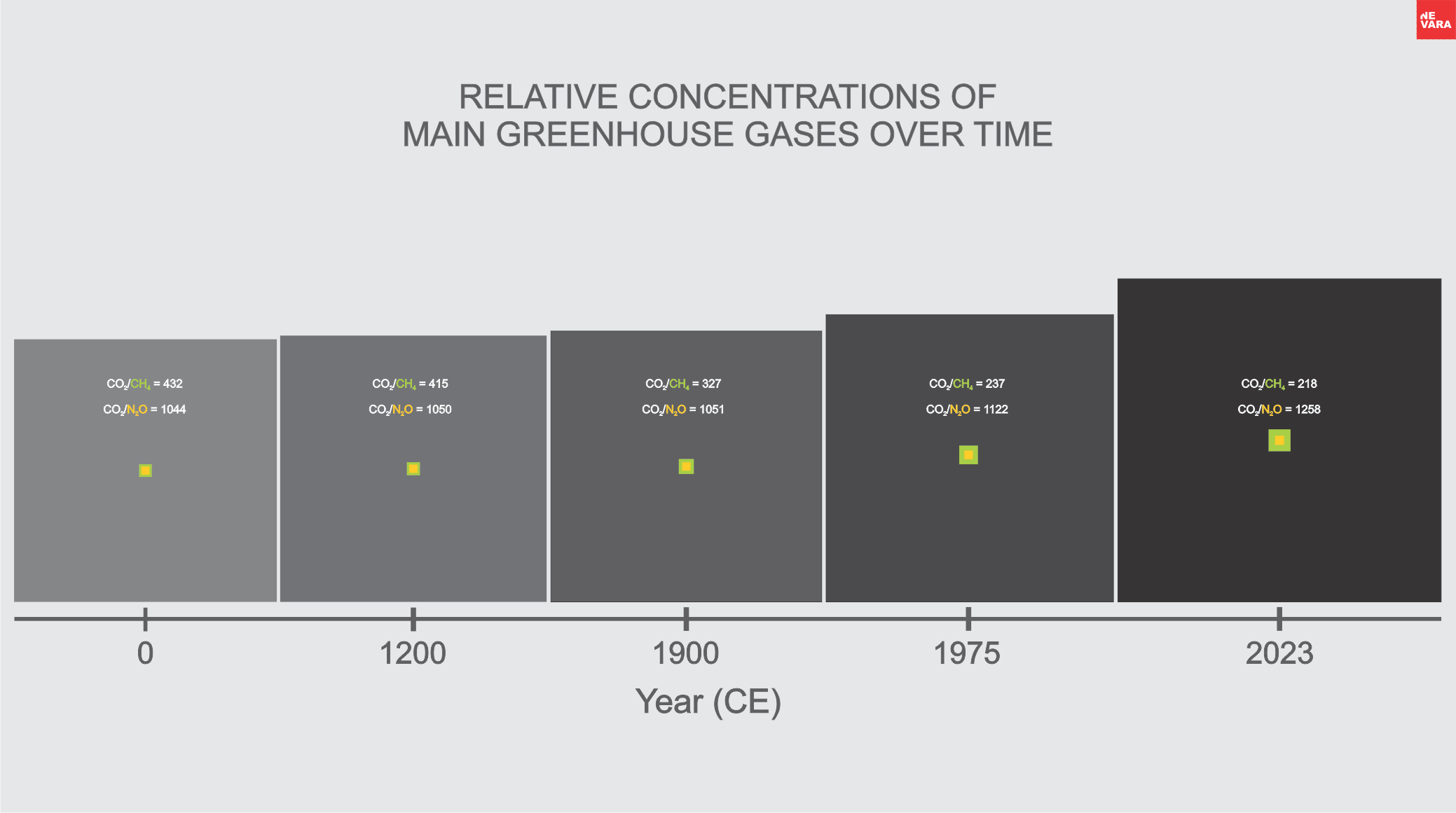
CONCENTRATION RATIOS OF MAIN GREENHOUSE GASES OVER TIME.
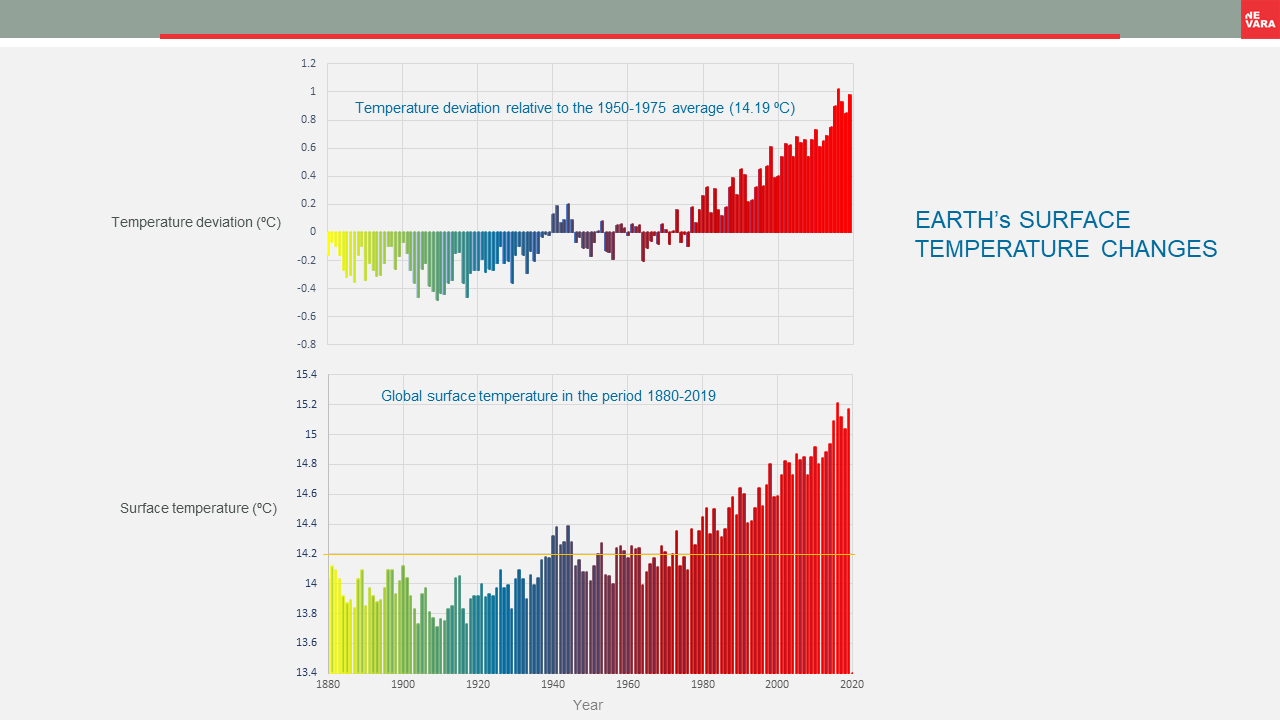
EARTH’s SURFACE TEMPERATURE CHANGES since the beginning of the industrial era.
 nevara4energy.blog